Resistance Training 101

Any person who is on a diet can tell you that strength is not just physical. Especially when a fresh batch of chocolate chip cookies comes out of the oven at her local coffee shop just as she approaches the register, or her office manager orders pepperoni pizza to celebrate a coworker’s birthday. But dieters may not realize that exercising their willpower will make them stronger.

Roy Baumeister and John Tierney explore the science of self-control in their new book Willpower. They note that people who exercise their willpower frequently often have better self-control. The next time you’re about to give in to an unhealthy temptation consider the great mental and emotional workout you’ll be giving yourself just by resisting…

Creamed Cauliflower Soup

This soup derives its silky texture to potato and not cream, so it’s low-fat and indulgent!

Ingredients

  • 1 teaspoon unsalted butter
  • 2 leeks, white parts only, well-washed and chopped
  • 1 head cauliflower, broken into florets
  • 1 medium all-purpose potato, cubed
  • 6 cups chicken stock
  • Salt
  • Freshly ground white pepper
  • 1/2 cup 1 percent low-fat milk (optional)
  •  fresh parsley (garnish)

Directions

Warm the butter over medium-low heat in a large saucepan. Add the leeks and, stirring frequently, allow them cook slowly for 10 minutes. Do not brown.

Stir in the cauliflower, potatoes, and stock. Season with the salt and pepper. Bring to a boil over high heat. Reduce the heat to medium, cover, and simmer for 20 minutes, or until the vegetables are very tender. Remove form the heat and allow to cool slightly.

Transfer to a blender or a food processor fitted with the metal blade. Process until smooth. Transfer to a clean saucepan and place over medium heat. Bring to a simmer. Taste and adjust the seasoning. If the soup is too thick, thin with water,  or your choice of low fat milk, soy milk, or almond milk. Top with parsley.

One cup has approximately 90 calories when made without milk, soy milk, or almond milk.

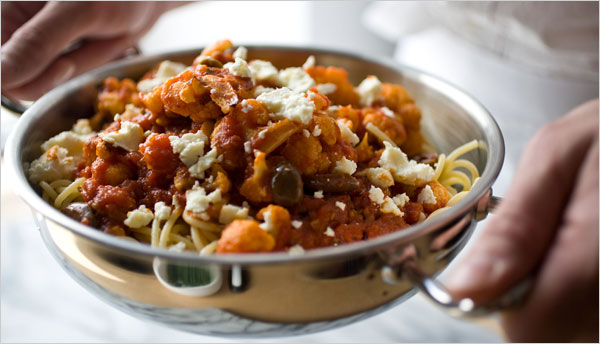
Roasted Cauliflower with Tomatoes, Olives, & Crushed Red Pepper

This is one of my favorite go-to dishes that I adapted from a recipe in the New York Times. Instead of using the cauliflower mixture as a pasta sauce, I use it as a flavorful side dish or easy, satisfying main course. I modify the recipe by using a whole head of cauliflower and decreasing the amount of olive oil used. One trick I found for making a little high quality olive oil go a long way is by using Misto, a handy kitchen gadget that lets you spray the oil of your choice.

Ingredients:

  • 1 medium head of cauliflower, broken into florets
  • about 1 – 1.5 tablespoons extra virgin olive oil
  • 2 garlic cloves, minced
  • 1/4 to 1/2 teaspoon red pepper flakes, to taste
  • 1 (14-ounce) can chopped tomatoes, with juice
  • Pinch of sugar
  • 1 teaspoon fresh thyme leaves, or 1/2 teaspoon dried thyme
  • Salt and freshly ground pepper
  • 12 kalamata olives, pitted and cut in half lengthwise
  • (optional) 2 ounces either feta (crumbled), ricotta salata, Parmesan, or a mix of Parmesan and Pecorino (grated)

1. Preheat oven to 400 degrees. Bring a large pot of generously salted water to a boil and add the cauliflower. Blanch for two minutes and transfer to a bowl of ice water. Drain and blot very dry.  Quarter the cauliflower florets, spray with olive oil (or if you’re not using Misto, toss with about 1/2 T olive oil and mix until coated). Salt the oiled florets generously. Transfer to a baking sheet, place in the oven and roast 30 minutes, stirring from time to time, until tender and lightly browned. Remove from the oven and set aside.

2. Meanwhile, in a wide, nonstick frying pan or a 3-quart saucepan, heat the remaining oil over medium heat and add the garlic and red pepper flakes. Cook, stirring, until fragrant, about one minute. Add the tomatoes, sugar, thyme and salt, and bring to a simmer. Simmer over medium-low heat, stirring often, until thick, 15 to 20 minutes. Stir in the cauliflower and the olives, and simmer a few minutes more. Taste and adjust seasonings.

3.  If you want cheese, sprinkle the cheese over the top and serve at once.

Values given below are for the entire dish served. Serves: 2-4

  • Calories: approx 500kcal, or 640kcal with feta cheese
  • Fat: approx. 30g, or 40g with feta cheese
  • Protein:approx 19g, or 30g with feta cheese

Decode Your Cravings

Nan Kathryn Fuchs, Ph.D., author of The Health Detective’s 456 Most Powerful Healing Secrets, helps you understand your cravings….

If you’re craving: Gummy Bears
You may need: Protein
Why?: “Having a hankering for sugary carbs is a signal that your body wants energy,” says Fuchs. For a longer-lasting boost, try to get at least 15 grams of protein at ever meal from fish, beans, or lean meat.

If you’re craving: Chocolate
You may need: Magnesium
Why?: Chocolate is high in heart-healthy magnesium. “Levels dip during a woman’s period,” says Fuchs. Aim for at least 300 milligrams of the mineral a day, about the amount in a cup of black beans and a cup of cooked spinach.

If you’re craving: French Fries
You may need: Good Fat
Why? Jonesing for greasy foods? Your likely coming up short on healthy fatty acids. Incorporate them into meals by drizzling a tablespoon of olive oil over your salad or veggies, or eat several servings of fish a week.

If you’re craving: Salty Pretzels
You may need: B Vitamins
Why? When our adrenal gland, which produces stress hormones, goes into overdrive, so does your desire for salt. To avoid too much sodium, snack on bananas or whole-grain crackers, which contain stress-relieving B vitamins.

Cutting back on salt? Hold the bread.

Today the U.S. Centers for Disease Control and Prevention released a report that reveals common of sodium in the average American diet. While some culprits–such as chips and processed cheeses and deli meats–aren’t too surprising, others are less obvious. Raw poultry and pork are often injected with saline solution as a preservative and flavor additive.

Top Sources Ten of Sodium

Breads and rolls
Cold cuts and cured meats
Pizza
Poultry
Soups
Sandwiches
Cheese
Pasta dishes
Meat dishes
Snacks  (pretzels, chips, crackers)

To reduce sodium from your diet, cut back on your use of prepared food items. carefully read the labels of all processed foods, and buy your meat from safer sources, such as reputable butchers or health food stores. Remember, “all natural” on the packaging doesn’t mean much. While injecting meat with sodium and other flavoring solutions may seem anything but natural, that term can legally apply to just about anything found in nature, including ammonia.

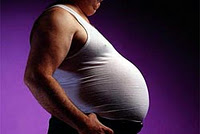
How A Beer Belly Is Made

The Skinny: Alcohol can make it harder for you to lose the fat!
Leave it to boys Men’s Health Magazine to break down the beer belly…
  1. You take a swig of beer.
  2. Within seconds, the beverage passes through your esophagus and into your stomach.
  3. Twenty percent of the alcohol is absorbed into your bloodstream; the rest is absorbed into your intestines.
  4. The alcohol travels through our blood to your liver, where it is broken down. During this process, waste products called acetate and acetaldehyde are created.
  5. Acetate and acetaldehyde signal your body to stop burning fat. At the same time, your body starts making fat from another waste product of alcohol, acetyl CoA.
  6. Your body can effectively process only 0.5 to 1 ounce of alcohol per hour. So the more you drink, the longer your body is inhibited from burning fat, and the more fat builds up from the excess acetyl CoA.

A 12-ounce beer contains about 0.6 ounces of alcohol.
The following also contain 0.6 ounces of alcohol

    • 5.5 ounces wine (11% alcohol)
    • 14.3 ounces of light beer (4.2% alcohol)
    • 1.5 ounces of hard liquor such as whiskey (40% alcohol/ 80 proof)
    • 1.2 ounces of hard liquor (50% alcohol/100 proof)

The above calculations are based on the percentage of alcohol present in each beverage, so the alcohol percentage or proof is given. For example, wine can sometimes be more than 11% alcohol. If you would like to learn more about calculating the amount of alcohol in your drinks, please visit www.elegantpie.com/cheers.html for formulas to help you calculate the ounces of alcohol in your drinks as well as blood alcohol content.

What’s the point? If you’re trying to lose fat, cut out alcohol for a while. You’ll see and feel your results faster.

Asian Vegetable Soup

Oh so simple and delicious, this skinny soup is low in calories and packed with vitamins and minerals.  It’s surprisingly filling, so it makes a perfect savory snack or satisfying first course.

It is also delicious made with chicken broth for a non-vegetarian option.

Ingredients:

  • fresh ginger, 2 1/2 – 3 inch piece, peeled and minced
  • 1 C onion, peeled and diced
  • 2 cloves garlic, diced
  • 1 T vegetable oil
  • 1 C red or green cabbage, thinly chopped
  • 2-3 small or baby bok choy, chopped
  • 12 oz of favorite mushrooms, washed and sliced
  • 3/4 C diakon radish, peeled and cubed
  • 6 C vegetable broth
  • 2 T rice vinegar
  • 1 t soy sauce

Directions:

Heat the oil over medium heat in a large soup pot, add onions, garlic, and ginger. Cook for 2 minutes until fragrant, stirring occasionally to keep the garlic from burning. Add cabbage, bok choy, and mushrooms and mix thoroughly. Saute for approximately 5  minutes. Add broth and radish and cook for ten minutes. Turn off heat, then mix in rice vinegar and soy sauce. Adjust seasoning to taste.

1 cup has less than 60 calories, so eat up!

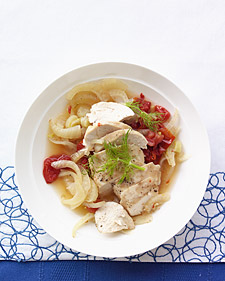
Recipe: Chicken with Fennel and Tomato

This recipe from Martha Stewart is perfect! It is testament to the fact that you don’t need to spend a lot of time or effort cooking in order to get a delicious meal. I modified her version slightly so that I get more vegetables and more broth per serving. Sometimes I add an additional 3/4 cup of chicken broth if I’m in the mood for more of a soup dish.

Ingredients:

  • 8 plum tomatoes, (about 1 pound), cored and cut in 3/4-inch pieces
  • 2 fennel bulbs, (10 to 12 ounces each), halved, cored, and thinly sliced crosswise, fronds reserved (see note)
  • 1/2 cup dry white wine
  • Coarse salt and ground pepper
  • 2 boneless, skinless chicken breast halves, (about 8 ounces each)
  • 3/4 cup low sodium chicken broth (optional)

Directions:

  1. In a large, deep skillet, combine tomatoes, fennel, and wine; season with salt and pepper. Arrange chicken breasts in a single layer on top of vegetables, allowing as much space between pieces as possible; season with salt and pepper.
  2. Bring mixture to a boil; reduce heat to medium-low, cover skillet, and simmer gently until chicken is opaque throughout, 15 to 20 minutes.
  3. Slice chicken breasts, and serve on top of vegetable mixture; garnish with reserved fennel fronds.
Serves 2-4. Nutritional information based on a 4 ounce portion of chicken and 1/4 the vegetable mixture.
Calories: approx 230
Fat: approx 2 grams
Protein: approx 25.5 grams

Take a Walk

Eating a meal high in saturated fat could do immediate harm to your blood vessels. But if you just inhaled an entire carton of gelato, don’t panic: A study in the European Journal of Applied Physiology suggests that going for a walk after a high-fat meal may reduce the food’s effect on your arteries. Researchers compared the heart health of eight 25-year olds after three scenarios:

  • eating a low-fat breakfast
  • eating a high-fat breakfast
  • eating a high-fat breakfast and then going for a 45-minute walk

While the arteries narrowed in the nonexercisers who ate the fatty meal, the arteries in the exercisers dilated (even more than in the low-fat eaters). So take a walk after a your next big celebratory dinner and undo some of the damage. Just don’t think a stroll will wipe the slate clean and regularly engage in binge-and-walk behavior.

Q: Will eating at night make me gain weight?

A: Perhaps. But not because something specific happens when the clock strikes 7pm, 8pm, or whatever arbitrary time you decide is “too late”.

So if bowl of cereal will have the same number of calories at 9am as it does at 9pm,  why do you hear, time and time again, that people who eat late at night tend to be heavier than those who finish eating earlier? Eating behaviors that occur later at night are the issue.

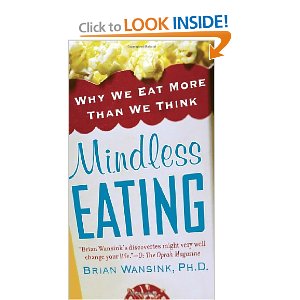
A recent study in the medical journal Obesity showed that people who ate after 8pm consumed an average of 250kcal more than people who ate earlier, but more strikingly they exhibited a number of other unhealthy habits such as preferring highly caloric processed or fast foods, eating while distracted, and sleeping less.  It was well documented in Mindless Eating that people who snacked while watching TV or a movie consume far more than they realize, and lack of sleep does affect hormones that control hunger and satiety so staying up past your bedtime can make your body crave chips or sugar when it really wants and needs sleep.

So the next time you’re hesitant to attend a dinner party because the meal will be served later than your usual meal time, remember you’re stomach won’t turn into a big, bloated pumpkin just because you’re eating when the clock strikes 9. But, if you’re consistently eating more than you should and more often than you should, you will gain weight… even if you don’t eat between 7pm and 7am.