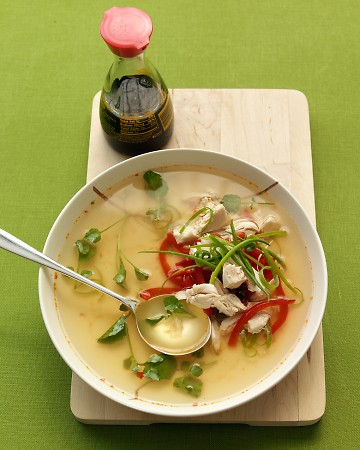
Asian Chicken and Chili Soup

While Martha Stewart’s recipe calls for freshly poached chicken, I think this spicy broth is a perfect way to turn leftover chicken into an exciting encore.

Ingredients

  • 6 cups chicken broth
  • 2 red bell peppers, (ribs and seeds removed), thinly sliced lengthwise and cut crosswise into 2-inch pieces
  • 2 tablespoons soy sauce
  • 1 to 3 teaspoons Asian hot chili sauce to taste
  • 12 ounces diced cooked chicken
  • 1 bunch (6 ounces) watercress, large stems trimmed
  • 2 scallions, thinly sliced lengthwise and cut crosswise into 2-inch pieces

Directions

  1. In a 3-quart saucepan, bring broth, bell peppers, soy sauce, and chili sauce to a simmer; cook until peppers are crisp-tender, about 6 minutes.
  2. Add chicken and watercress; cook 1 minute. Ladle into bowls, and top with scallions.

Get Cultured

How to Choose the Best Yogurt
You want to eat healthier, so the next time you swing by the dairy case, you reach for the yogurt. Healthy, right? Perhaps…

There are so many yogurt products out there, and many of them are absent of all the redemptive qualities that make us seek it out in the first place. Here’s a list of guidelines to help you choose a tasty yogurt that gives you all the health benefits you’re craving.

Personally, I prefer low-fat over fat-free yogurt. The texture tends to be more satisfying and I find that little bit of fat keeps me feeling full longer. Compare the labels and you might be surprised to find that there is little difference calorically between the two. You should, after all, enjoy what you’re eating.

When choosing yogurt, look for Low-Fat or Fat-Free Yogurt that contains (per 6-ounce serving):

  1. Has the official “LIVE AND ACTIVE CULTURES” Seal.
  2. No more than 180 calories.
  3. No more than 1.5 grams of saturated fat. Saturated fat’s daily limit of 20 grams is easy to reach, so avoid it here.
  4. No more than 30 grams of sugar. Naturally occurring lactose accounts for about 12 grams; more means excess sweeteners.
  5. At least 20% of your daily calcium. This nutrient can be watered down by added sugars and filler ingredients.
  6. 300 mg of potassium. Okay, so this tip is a little picky, but if you can find it, go for it!

Remember:
“Plain” doesn’t have to be… Layer low-fat Greek yogurt with blueberries (or any fresh fruit), a thin drizzle of honey, and two or three finely chopped almonds. Mmmmm.

If it says “creme” or “custard” on it, nutritionally, it’s probably one step away from ice cream.

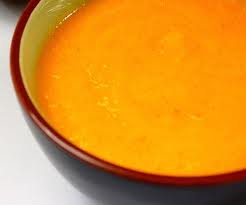
Carrot-Ginger Soup


Ingredients

  • 2 tablespoons extra-virgin olive oil
  • 1 cup chopped sweet onion
  • salt
  • 1 tablespoon minced garlic
  • 1 tablespoon minced peeled ginger
  • 2 pounds carrots, peeled and chopped
  • 1 medium russet potato, peeled and chopped
  • 6 cups low-sodium chicken or vegetable stock
  • 1 teaspoon minced fresh thyme
  • Freshly ground pepper

Directions

Combine the olive oil and onion in a Dutch oven or heavy pot over medium-high heat. Sprinkle with 1/2 teaspoon salt and cook, stirring, 10 minutes, until just starting to caramelize. Add the garlic, thyme, and ginger and cook, stirring so as not to burn, 2 more minutes until fragrant.  Stir in the carrots, potato and the chicken or vegetable stock. Bring to a simmer, cover and cook until the carrots and potato are very tender, 15 to 18 minutes. Keep warm.

Puree the soup with an immersion blender until very smooth (or puree in a regular blender in batches).

Makes about 8 servings, about 140 calories each.

Creamed Cauliflower Soup

This soup derives its silky texture to potato and not cream, so it’s low-fat and indulgent!

Ingredients

  • 1 teaspoon unsalted butter
  • 2 leeks, white parts only, well-washed and chopped
  • 1 head cauliflower, broken into florets
  • 1 medium all-purpose potato, cubed
  • 6 cups chicken stock
  • Salt
  • Freshly ground white pepper
  • 1/2 cup 1 percent low-fat milk (optional)
  •  fresh parsley (garnish)

Directions

Warm the butter over medium-low heat in a large saucepan. Add the leeks and, stirring frequently, allow them cook slowly for 10 minutes. Do not brown.

Stir in the cauliflower, potatoes, and stock. Season with the salt and pepper. Bring to a boil over high heat. Reduce the heat to medium, cover, and simmer for 20 minutes, or until the vegetables are very tender. Remove form the heat and allow to cool slightly.

Transfer to a blender or a food processor fitted with the metal blade. Process until smooth. Transfer to a clean saucepan and place over medium heat. Bring to a simmer. Taste and adjust the seasoning. If the soup is too thick, thin with water,  or your choice of low fat milk, soy milk, or almond milk. Top with parsley.

One cup has approximately 90 calories when made without milk, soy milk, or almond milk.

Decode Your Cravings

Nan Kathryn Fuchs, Ph.D., author of The Health Detective’s 456 Most Powerful Healing Secrets, helps you understand your cravings….

If you’re craving: Gummy Bears
You may need: Protein
Why?: “Having a hankering for sugary carbs is a signal that your body wants energy,” says Fuchs. For a longer-lasting boost, try to get at least 15 grams of protein at ever meal from fish, beans, or lean meat.

If you’re craving: Chocolate
You may need: Magnesium
Why?: Chocolate is high in heart-healthy magnesium. “Levels dip during a woman’s period,” says Fuchs. Aim for at least 300 milligrams of the mineral a day, about the amount in a cup of black beans and a cup of cooked spinach.

If you’re craving: French Fries
You may need: Good Fat
Why? Jonesing for greasy foods? Your likely coming up short on healthy fatty acids. Incorporate them into meals by drizzling a tablespoon of olive oil over your salad or veggies, or eat several servings of fish a week.

If you’re craving: Salty Pretzels
You may need: B Vitamins
Why? When our adrenal gland, which produces stress hormones, goes into overdrive, so does your desire for salt. To avoid too much sodium, snack on bananas or whole-grain crackers, which contain stress-relieving B vitamins.

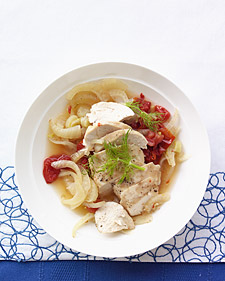
Recipe: Chicken with Fennel and Tomato

This recipe from Martha Stewart is perfect! It is testament to the fact that you don’t need to spend a lot of time or effort cooking in order to get a delicious meal. I modified her version slightly so that I get more vegetables and more broth per serving. Sometimes I add an additional 3/4 cup of chicken broth if I’m in the mood for more of a soup dish.

Ingredients:

  • 8 plum tomatoes, (about 1 pound), cored and cut in 3/4-inch pieces
  • 2 fennel bulbs, (10 to 12 ounces each), halved, cored, and thinly sliced crosswise, fronds reserved (see note)
  • 1/2 cup dry white wine
  • Coarse salt and ground pepper
  • 2 boneless, skinless chicken breast halves, (about 8 ounces each)
  • 3/4 cup low sodium chicken broth (optional)

Directions:

  1. In a large, deep skillet, combine tomatoes, fennel, and wine; season with salt and pepper. Arrange chicken breasts in a single layer on top of vegetables, allowing as much space between pieces as possible; season with salt and pepper.
  2. Bring mixture to a boil; reduce heat to medium-low, cover skillet, and simmer gently until chicken is opaque throughout, 15 to 20 minutes.
  3. Slice chicken breasts, and serve on top of vegetable mixture; garnish with reserved fennel fronds.
Serves 2-4. Nutritional information based on a 4 ounce portion of chicken and 1/4 the vegetable mixture.
Calories: approx 230
Fat: approx 2 grams
Protein: approx 25.5 grams

My Philosophy: The Body You Want Is Yours

A lot of my clients and friends ask me if I diet. I don’t believe the word “diet” should be a verb (as in, “Are you dieting?”). I’m a strong believer that one’s diet should be a way of life. I don’t believe in good foods or bad foods: chocolate cake=bad, rice cake= good. [It should be noted that I do not consider highly processed foods, most fast foods, and foods containing certain artificial ingredients (hydrogenated oils, artificial sweeteners, &c.) real food that is fit for consumption.] Few things in life are black and white, so why should we expect what we eat to be so simple and binary? Some foods are healthier than others, and those should be the ones that make up the bulk of what we eat.

My philosophy is that we should listen to what our bodies are telling us. If we are gaining weight, if we are becoming hypertensive, if our cholesterol levels are high, if we’re always hungry/stuffed, we should take a good, unbiased look at what we eat, when we eat, why we eat, and how we eat, and we should modify those things until we are healthy. What we consume should not negatively affect us, and if it does and we do not change our eating habits, we only have ourselves to blame. We don’t have to diet (ie. deprive) we need to adjust our diet (how, how much, and what we eat).

Losing Weight

To effectively lose weight, one needs to adjust their diet as well as their activity level. Doing one without the other probably won’t have much of a lasting effect. Think of it as a lifestyle change that will give you a changed body, a healthier body.

Our bodies are amazing things. They will do only what we ask of them. If you want the strong, lean body of an active, healthy person, you are going to have to embark on the process of becoming an active, healthy person yourself yourself.
You won’t get a strong, lean body by watching 20 hours of tv a week and substituting rice cakes for potato chips. If you’re willing to accept that your lifestyle as it is now is not giving you the physique you want and you are committed to altering your lifestyle by adopting a healthier diet and increasing your physical activity, your body will listen. It may grumble, it may ache and complain, but it will listen.

A good friend of mine is always saying, you are the master of your own destiny. You are the master of your body as well.

Change Your Diet, Change Perspective

It’s common for many people to improve the quality of their food, make healthier choices, and still find they are not losing weight. Portion size is very important. It is crucial. American meals, especially the ones served at restaurants, have lost all sense of proportion. Our dinner plates are huge. Our spoons are huge. We need to relearn what a real portion size is and accept that. As long as we believe that a steak should be 24 ounces (as opposed to 4-6 ounces), we are not going to get the bodies we want.

At home, use smaller plates and fill them mostly with brightly colored vegetables. Keep your protein portion about the size of a deck of cards and your starch about 1/3 or 1/2 cup. Still hungry? Have some more steamed string beans, some more asparagus, another helping of broccoli.

Hitting Reset
When you are actively trying to change your diet, to nurture your palate to accept and enjoy healthier real flavors, and to lose weight, you may want to step away from the desserts for a while. If you eat sweets or starchy foods regularly, you’re probably on a sugar rush roller coaster and unstable blood sugar can wreak havoc on your hunger levels.

You should also probably cut out alcohol, which is high in calories and interferes with your body’s ability to metabolize your excess fat.

This does not mean that you will forever forgo these items, but just know that for the time being, you are taking a break and resetting your palate and your body. If you must, savor just a bite of some high quality sweet instead of having a whole dessert or candy bar. When you achieve your goal weight, remember that you can have anything you want, occasionally and in moderation.

Exercise

The healthiest way to lose weight is to adopt a healthy diet and exercise. We should all be getting 45 minutes a day of exercise. At least. Our bodies are designed to be active. Unfortunately, our jobs often require we sit still for long periods of time. This starts a vicious circle of fatigue and inflexibility. This vicious circle continues even when we first start working out. It can last a few weeks, but slowly, surely, your body will wake up and rise to the occasion. It will do what you ask of it; it will get stronger, more flexible, healthier. You’ll have more energy. As you come into your body, you’ll be amazed at how good it feels to be more active, to be stronger. Your body is meant to be strong and healthy and your hard work and exercise will be rewarded. Your body is a part of you. Don’t neglect it.

Before you claim to have no time, think about the half hour you spend watching TV, the way the minutes add up when you’re surfing the internet, the time you waste dreading going to the gym. Put on your running shoes, get out the door, and start moving. You’ll be done before you know it.

Math

While I don’t believe we should be wed to the scale, there are some important numbers to consider. 3500 is the number of calories in a pound. If over the span of a month, you consume 7000 extra calories, you will gain two pounds of fat. Likewise, if over the span of a week, if you decrease your calorie consumption by 200 calories a day (that’s about equal to a slice of cheese and a can of soda) while increasing your energy expenditure (exercise) by about 300 calories every day, you can expect to lose a pound.
What about all those diets you read about that tell you to cut out carbs and you’ll lose 10 pounds in a week…. well, most of that is water. Unless you have an excessive amount of weight to lose, it is safe and reasonable for most people to lose between 1-2 lbs of fat in a week.
Going back to what I wrote earlier about being wed to the scale… you should use how you look, how you feel, how your clothes fit, as better indicators of your progress. Muscle weighs more than fat. How much more? A pound of fat is about the size of a large grapefruit. A pound of muscle is about the size of a small orange or tangerine. So if you are losing fat and gaining muscle, the numbers on the scale might not be moving very much. If the jeans you banished to the back of your closet or some other “thin clothes” are telling you you lost weight but your scale is telling you otherwise, rest assured that you may not have lost “weight” but you certainly lost fat.